


Leave Your Message
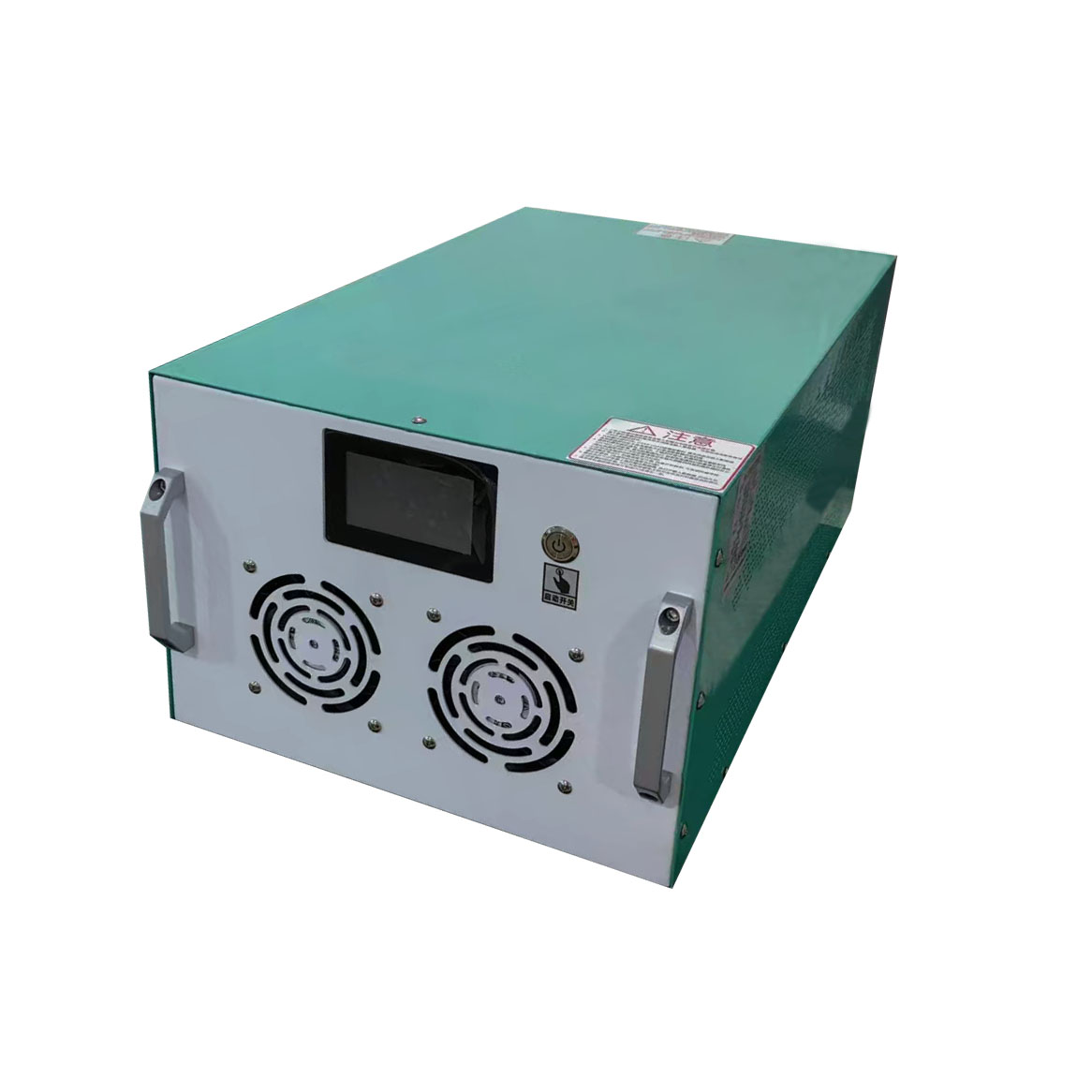
120/240V to 120/208V 3 Phase Power Phase Converter - China Factory Suppliers for Industrial Applications

Hot Products

Products Categories
Featured Products

120/240V to 120/208V 3 Phase Power Phase Converter - China Factory Suppliers for Industrial Applications

,

Our power phase converter transforms 120/240V split phase into 120/208V three-phase power, making it an essential device for various industrial applications. This reliable phase-splitting converter effectively converts single-phase or two-phase alternating current into standard three-phase alternating current, catering to several key needs.

,

Ideal for powering three-phase equipment, our converters ensure a stable power supply for industrial motors, CNC machine tools, lifts, and more, especially in regions lacking three-phase mains or facing power limitations. Additionally, it offers voltage matching and step-up capabilities, elevating single-phase 240V to three-phase 380V to meet your specific equipment voltage requirements.

,

Our phase converter also addresses phase compensation and balancing, creating three-phase power with a 120° phase shift through advanced algorithmic control. This feature effectively mitigates power imbalance issues commonly encountered during single-to-three-phase conversion.

,

As a trusted supplier in China, we pride ourselves on delivering high-quality power phase converters directly from our factory, ensuring efficient performance and reliability for various industrial applications.

,
  • AC input 120/240V 60HZ
  • AC output 120/208V 60HZ

AC-DC-AC Conversion Structure

Rectification Stage Converts single-phase alternating current into direct current (AC-DC), providing a stable DC source for subsequent inversion.

Inverter Stage Utilises high-frequency switching devices (e.g., IGBT, MOSFET, IPM) and PWM modulation technology to convert DC to three-phase AC (DC-AC), precisely controlling output voltage, frequency, and phase.

Phase Generation Algorithm Employs techniques such as SVPWM (Spatial Vector Pulse Width Modulation) to generate accurate three-phase sine waves, ensuring 120° phase separation and low waveform distortion.

🔑 Key Technical Characteristics
📈

High Conversion Efficiency

Achieves conversion efficiency exceeding 94% with minimal no-load losses.

Rapid Dynamic Response

Exhibits short transient response times, adapting to sudden load variations.

🛡️

Comprehensive Protection

Incorporates short-circuit, overload, and overtemperature protection to ensure safe equipment operation.
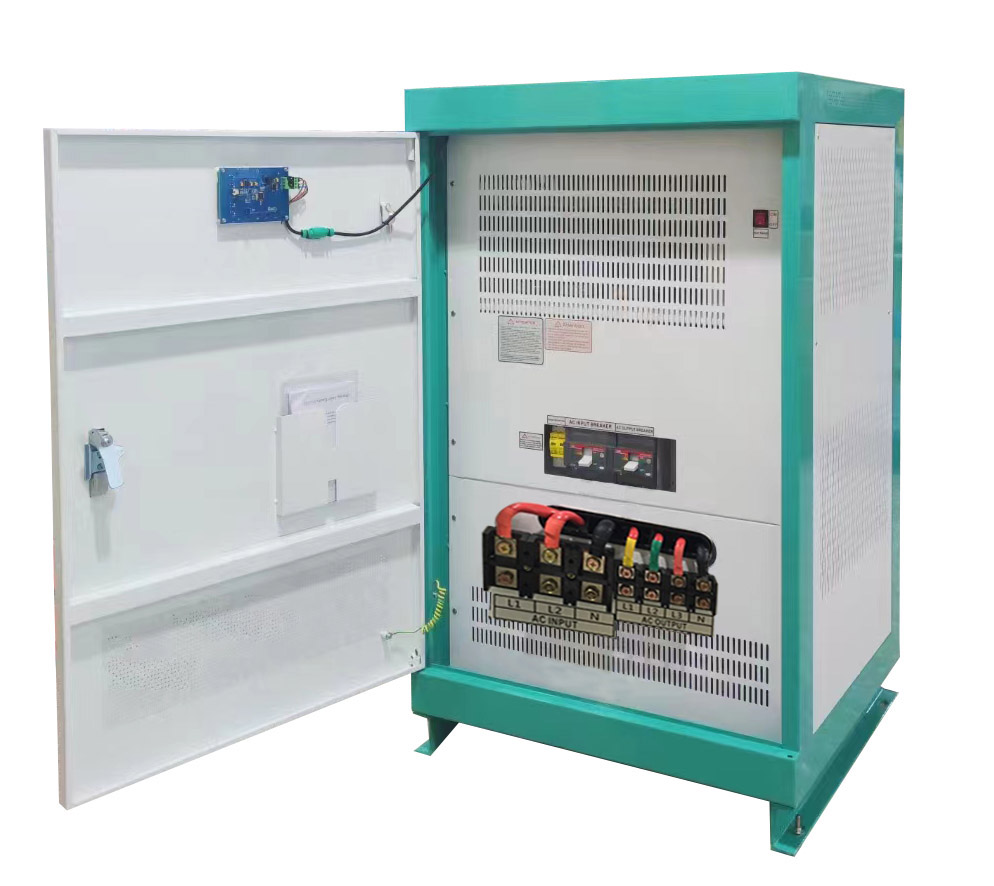
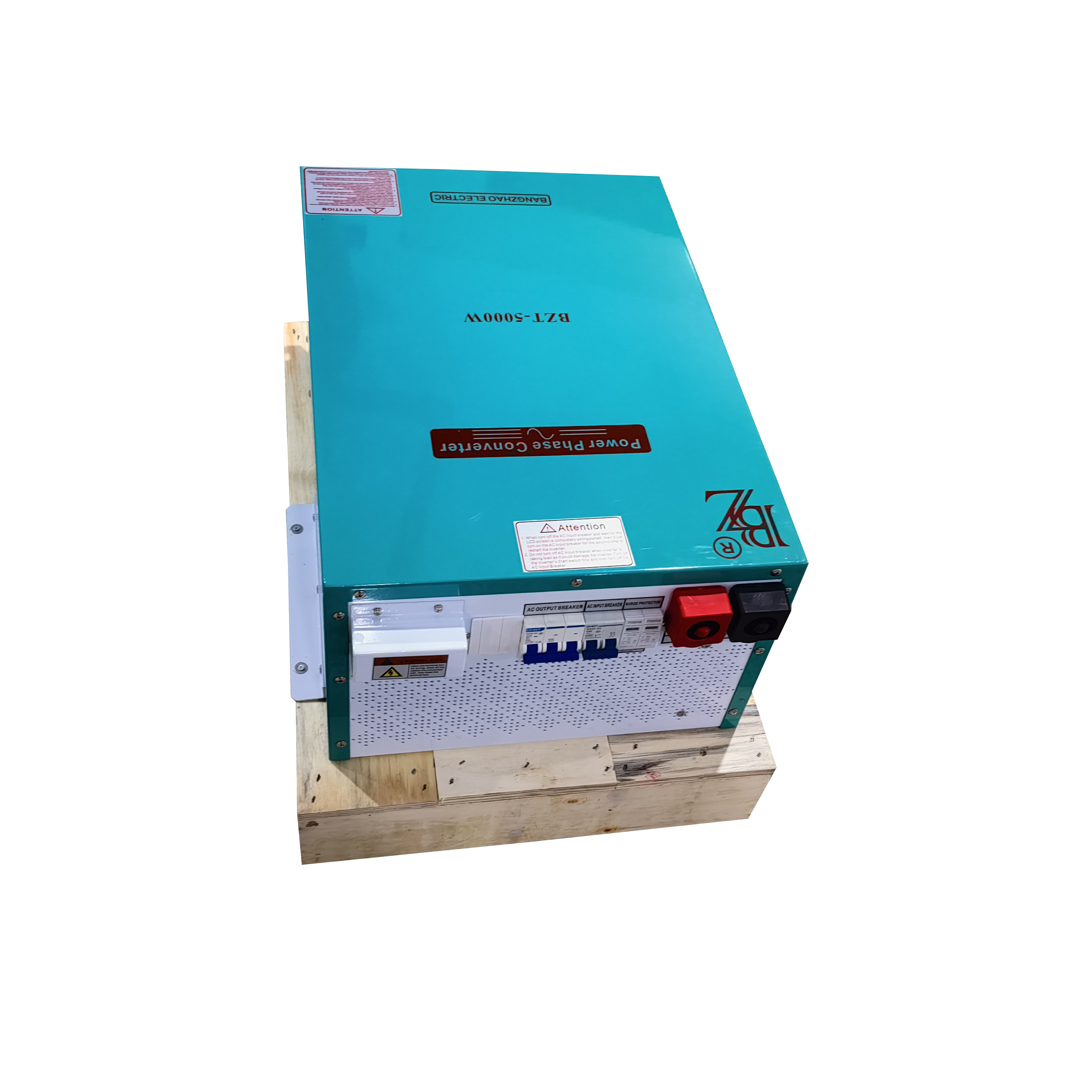
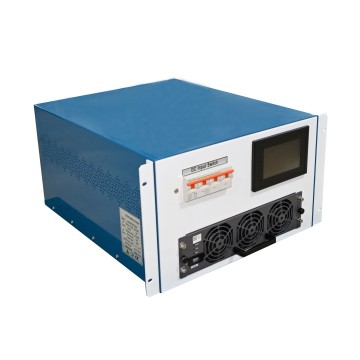
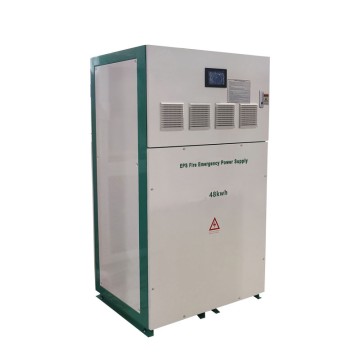
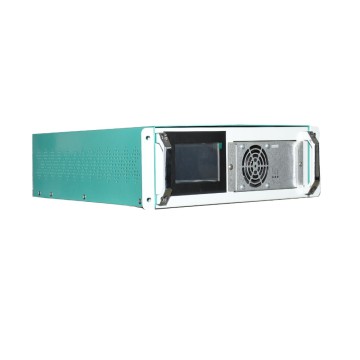
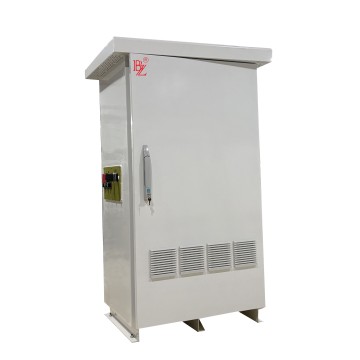
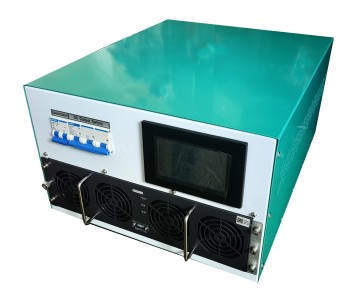
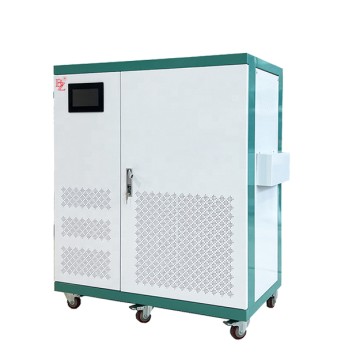
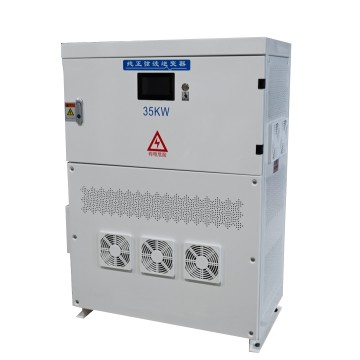
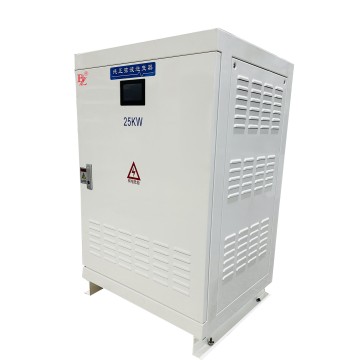
Split phase to 3 phase
Stand Type
Rack Type
Rack Type

🔬 Principle, Applications & Features
⚙️ Principle Integrates rectification, inversion and control modules to generate three-phase electricity via the SVPWM algorithm.
🏭 Applications High-precision motor drives, off-grid renewable energy systems, industrial automation, etc.
✅ Features Produces pure output waveforms and supports variable-frequency speed control, though at a higher cost.

🏗️ Application Case Studies
🔩

Industrial Motor Drives

In factories lacking three-phase power, phase-splitting converters supply equipment such as CNC machine tools and compressors, ensuring uninterrupted production.

📌 Case Study: An automotive components factory utilised BZT series converters to transform single-phase 220V into three-phase 380V, driving a 15kW motor with 90% efficiency and stable operation.
☀️

Off-Grid New Energy

Within photovoltaic and wind power systems, converts single-phase DC to three-phase AC for load operation, enhancing energy utilisation efficiency.

📌 Case Study: A distributed PV project employs converters to achieve seamless integration between single-phase PV panel outputs and three-phase AC load operation.
🏥

Emergency Power & Standby Systems

Serves as supplementary three-phase power assurance for critical facilities such as data centres and hospitals, complementing UPS systems.

📌 Case Study: A hospital utilised a phase-splitting three-phase converter to power operating theatre lifts during mains failure, ensuring safe patient transfer.

📋 Selection and Usage Recommendations
⚖️

Power Matching

Select converter capacity based on load power, typically allowing a 20%–30% margin to accommodate start-up surges.

💡 Example: For driving a 7.5kW motor, a converter rated at 10kVA or above is recommended.
📊

Waveform Quality

For inductive loads such as motors, prioritise output waveform distortion rate (THD) – select products with THD < 5%.

🌡️

Environmental Adaptability

In high-temperature, humid, or vibration-prone environments, opt for converters with mains-frequency isolation transformers to enhance stability.


Frequently Asked Questions
Q What is an AC-DC-AC phase-splitting converter and how does it work?
An AC-DC-AC phase-splitting converter first rectifies single-phase AC into DC, then uses high-frequency switching devices (IGBT, MOSFET, or IPM) combined with PWM modulation to invert the DC back into three-phase AC output. The SVPWM algorithm ensures accurate 120° phase separation and low waveform distortion.
Q What conversion efficiency can I expect from these converters?
These converters typically achieve conversion efficiencies exceeding 94%, with minimal no-load losses. For example, the BZT series has demonstrated 90% efficiency when driving a 15kW industrial motor in real-world factory deployments.
Q How do I select the correct converter capacity for my motor?
Always choose a converter rated 20%–30% above your actual load power to accommodate motor start-up surges. For instance, a 7.5kW motor requires a converter rated at 10kVA or above to ensure reliable and safe operation.
Q What is THD and why does it matter for motor-driven applications?
THD (Total Harmonic Distortion) measures the purity of the output waveform. For inductive loads like motors, high THD can cause overheating, vibration, and reduced efficiency. It is recommended to select converters with a THD of less than 5% for motor-drive applications.
Q Can these converters be used in harsh industrial environments?
Yes. For high-temperature, humid, or vibration-prone environments, converters equipped with mains-frequency isolation transformers are recommended. These models offer enhanced stability and protection against environmental stress factors.
Q What protection features are built into these phase-splitting converters?
These converters incorporate comprehensive protection mechanisms including short-circuit protection, overload protection, and overtemperature protection. These features work together to safeguard both the converter itself and the connected equipment during abnormal operating conditions.

Leave Your Message